
TL;DR (Pick based on your goal)
| If you care most about… | Best default pick | Why |
|---|---|---|
| “It must be a diamond” + best long-term perception | Natural diamond | Same material as lab, but the market assigns it higher status and usually better resale relative to retail. |
| Diamond look + best value per “diamond” | Lab-grown diamond | It’s still diamond (carbon crystal). You pay less for the same physics; resale tends to be weaker. |
| Maximum sparkle per dollar | Moissanite | Very bright and “fiery,” durable for daily wear, and typically far cheaper. Not a diamond. |
1) Materials: what each stone is
Natural diamond (mined)
- Material: diamond = crystalline carbon.
- Origin: formed naturally under high pressure/temperature, then mined, sorted, cut, and sold.
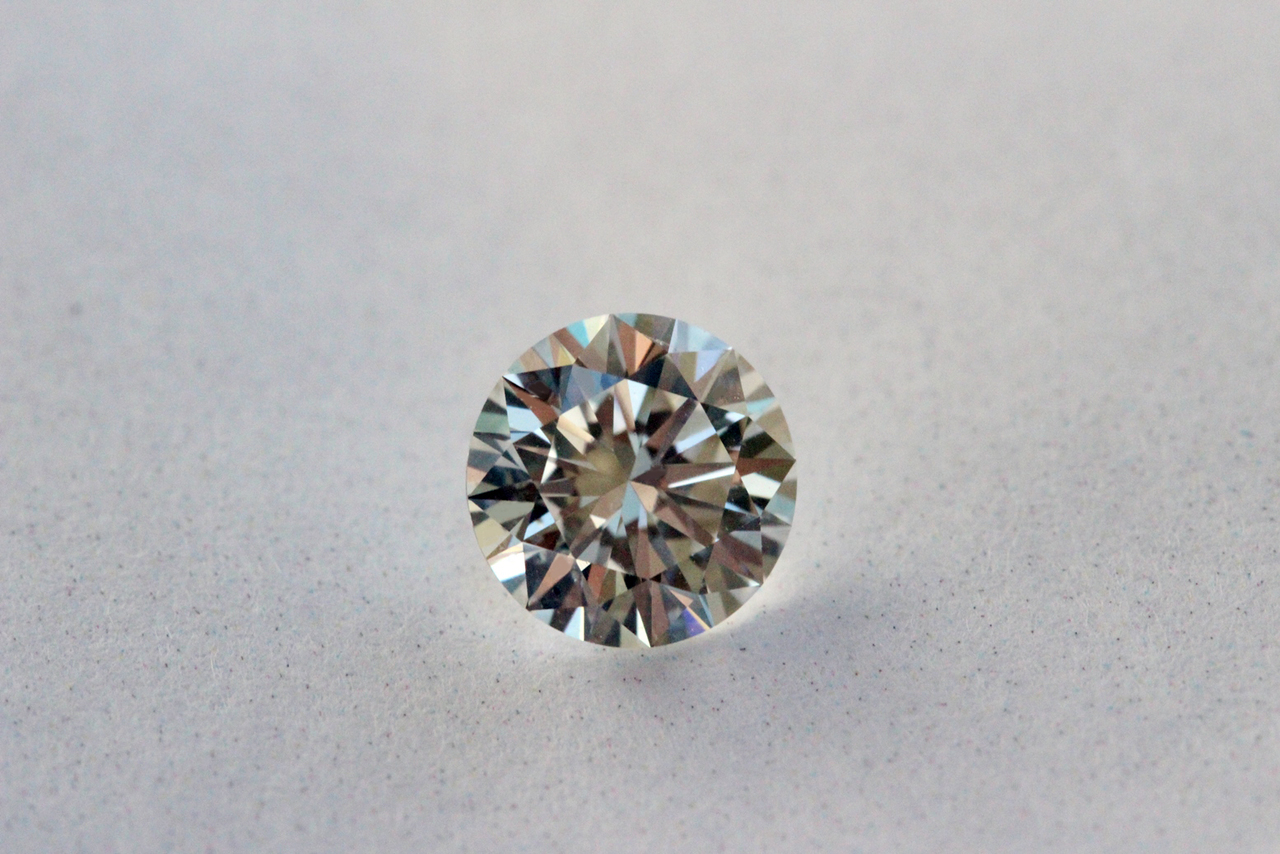
Image credit: “Round Brilliant Cut Diamond” (CC BY-SA 4.0, Petragems, “Own work”) via https://commons.wikimedia.org/wiki/File:Round_Brilliant_Cut_Diamond.jpg.
Lab-grown diamond (CVD / HPHT)
- Material: also diamond = crystalline carbon.
- Origin: grown in controlled conditions (commonly HPHT = high-pressure high-temperature; CVD = chemical vapor deposition).
- Important: “lab-grown” describes origin, not material.

Image credit: “HPHTdiamonds2.JPG” (Public domain, Materialscientist, “Own work”) via https://commons.wikimedia.org/wiki/File:HPHTdiamonds2.JPG.
Moissanite (Marquise moissanite is just a cut shape)
- Material: moissanite = silicon carbide (SiC).
- Origin: natural moissanite exists but is rare; gemstones are generally synthetic SiC.
- “Marquise”: describes the shape/cut, like round/princess/oval—not a different material.

Image credit: “Moissanite-USGS-20-1002b.jpg” (Public domain, Andrew Silver, USGS Photographic Library credit on file page) via https://commons.wikimedia.org/wiki/File:Moissanite-USGS-20-1002b.jpg.
2) Sparkle & optics: why they look different
What people call “sparkle” is a mix of:
- Brilliance (white light return)
- Fire (colored flashes; dispersion)
- Scintillation (sparkle pattern as the stone moves)
The numbers that actually matter (quick reference)
| Property | Natural diamond | Lab-grown diamond | Moissanite |
|---|---|---|---|
| Chemical composition | Carbon (C) | Carbon (C) | Silicon carbide (SiC) |
| Mohs hardness (scratch resistance) | 10 | 10 | ~9.25 |
| Refractive index (RI) | ~2.42 | ~2.42 | ~2.65–2.69 |
| Dispersion (“fire”) | ~0.044 | ~0.044 | ~0.104 |
| Birefringence | No (isotropic) | No (isotropic) | Yes (often visible as “double refraction”) |
Sources (starting points with citations you can follow):
- Diamond:
https://en.wikipedia.org/wiki/Diamond - Lab-grown diamond:
https://en.wikipedia.org/wiki/Synthetic_diamond - Moissanite:
https://en.wikipedia.org/wiki/Moissanite
Diamond vs. moissanite: the “fire” giveaway
- Moissanite is famous for looking more “rainbow-y” under many lighting conditions.
- Diamond tends to look more white/neutral in its sparkle (still has fire, but typically less “disco ball” than moissanite).

Image credit: “Synthetic SiC.jpg” (CC0 1.0, Alon-De-Lon, “Own work”) via https://commons.wikimedia.org/wiki/File:Synthetic_SiC.jpg.
Natural diamond vs. lab diamond: optics are the same category
- Because both are diamond, their optical behavior is fundamentally the same.
- Differences you may see in real life usually come from cut quality and clarity (and sometimes growth-related features detectable by labs), not “lab vs mined” as a visual category.
3) Durability: daily wear reality
For rings, durability is not just hardness; it’s also how a stone handles impact, edges, and long-term abrasion.
- Diamond (natural or lab): top-tier hardness (Mohs 10 → extremely scratch resistant).
- Moissanite: also very hard (~Mohs 9.25) and commonly used for daily wear; it’s not as hard as diamond, but it’s still far above most gemstones.
Practical takeaway:
- If you’re rough on jewelry or you want a forever ring, both diamond and moissanite are viable—but diamond is the “benchmark.”
4) Price: what you’re actually paying for
Natural diamond pricing
You pay for:
- the stone’s 4Cs (cut, color, clarity, carat),
- branding/retail margin,
- and a long-established market perception that “natural” is premium.
Lab-grown diamond pricing
You usually pay less because:
- supply can scale (factories can make more),
- and market prices have been trending downward as production expands and competition increases.
Moissanite pricing
You usually pay far less because:
- it’s not a diamond,
- and the market positions it as a value alternative.
Practical takeaway:
- If your goal is “most diamond per dollar,” lab-grown usually wins.
- If your goal is “most sparkle per dollar,” moissanite often wins.
5) Resale: the part most people don’t want to talk about
This is where expectations get wrecked.
Natural diamond resale (the “dog water” reality—explained carefully)
- In many consumer scenarios, retail diamonds resell for far less than retail.
- Why? Retail includes marketing, storefront overhead, and margin. Resale buyers pay closer to wholesale/secondary-market economics.
- Some stones hold value better than others (excellent cut, desirable size ranges, strong certs), but “I’ll get my money back” is not a safe assumption.
Lab-grown diamond resale
- Often weaker resale than natural because supply is expandable and retail prices have been falling.
- That doesn’t make lab diamonds “bad”—it just means you should buy them for wearing, not as an investment.
Moissanite resale
- Typically limited resale market and low recovery relative to what you paid.
- Again: buy it for enjoyment and value, not resale.
6) The diamond supply chain (and why people call it “scammy”)
Let’s separate two ideas:
- Diamonds as a material: legitimately rare in “large, clean, gem-quality” form, extremely useful industrially, and beautiful when cut well.
- Diamonds as a consumer product: historically shaped by marketing, controlled distribution, and cultural pressure.
A simplified chain
1) Mining / sourcing (or lab growth)
2) Sorting & valuation (rough grading)
3) Cutting & polishing (where a lot of “beauty” is created)
4) Certification (independent labs issue grading reports)
5) Wholesale distribution
6) Retail (brands, markups, financing)
7) Secondary market (where prices behave very differently than retail)
“Diamonds aren’t rare” vs “gem diamonds are rare”
Both can be true depending on what someone means:
- Diamond (as a material) is widely present in the Earth.
- Gem-quality diamonds (size + clarity + color + cut potential) are a smaller subset.
The “monopoly / manufactured scarcity” critique
Historically, the diamond market’s pricing and social meaning were heavily influenced by large players, stockpiles, and marketing that linked diamonds to romance and status—most famously the “A Diamond is Forever” messaging associated with De Beers-era marketing history.
If you want to read the marketing history overview, start here:
- De Beers background (includes market control/marketing sections):
https://en.wikipedia.org/wiki/De_Beers - “A Diamond Is Forever” campaign background:
https://en.wikipedia.org/wiki/A_Diamond_Is_Forever
(These are not “primary sources,” but they’re a reasonable jump-off point and include citations you can follow.)
7) How to buy smart (and avoid regrets)
- Decide your priority: “must be natural,” “must be diamond,” or “best value sparkle.”
- Overweight cut quality: cut drives beauty more than most people realize.
- Don’t buy for resale: assume resale is poor and be pleasantly surprised if it isn’t.
- Get documentation:
- Natural diamonds often come with a grading report from major labs.
- Lab-grown diamonds should be clearly disclosed as lab-grown and should have a report from a reputable lab used in that segment.
- Compare stones in the lighting you live in: moissanite especially can look different under different light sources.
Appendix: extra visuals (for nerds)
What “CVD diamond” can look like under a microscope (material science context)

Image credit: “CVD diamond.jpg” (CC BY-SA 3.0, Kugel, “Own work”) via https://commons.wikimedia.org/wiki/File:CVD_diamond.jpg.
What rough diamond can look like (not all diamonds start “sparkly”)

Image credit: “Raw light brown diamond crystal cut in half 1.jpg” (CC BY-SA 4.0, W.carter, “Own work”) via https://commons.wikimedia.org/wiki/File:Raw_light_brown_diamond_crystal_cut_in_half_1.jpg.
Share on
Twitter Facebook LinkedIn☕ Buy me a coffee! 💝
If you found this article helpful, consider buying me a coffee to support my work! 🚀